Know when to involve engineering
Not every difficult question is a product defect. Setup problems, unclear instructions, and service failures can look similar from the member’s perspective.
Support needs enough product knowledge to investigate what it can and recognize when another team is needed. Escalating too quickly interrupts engineers with avoidable work. Waiting too long leaves members stuck and can delay attention to a wider problem.
Your teams should agree on what deserves immediate attention and what can follow the normal process, based on the impact and urgency.
Make the handoff useful
“Someone says it’s broken” gives an engineer very little to work with. Sending an entire chat history without explanation is not much better.
A useful handoff makes the problem understandable and carries forward what support has already learned. Getting that balance right takes someone who understands the product, can ask relevant questions, and knows which details matter.
Depending on the issue and the access available, technical support can take the investigation further. That might mean reproducing a failure, identifying a likely cause, or submitting a proposed fix for engineering review.
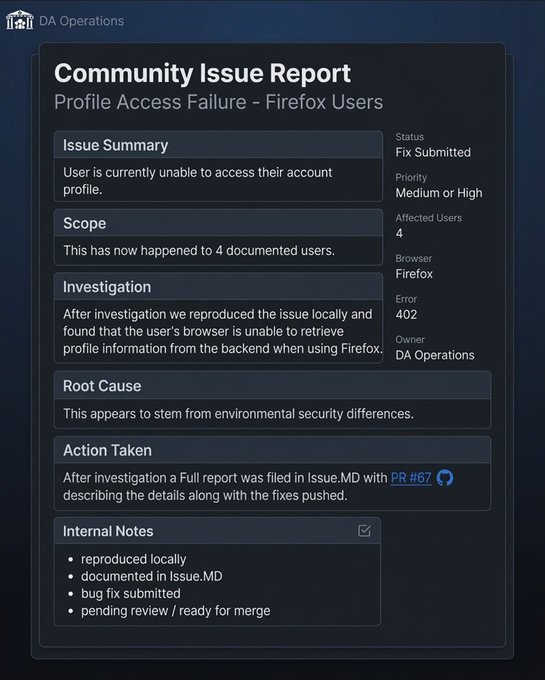
The report brings the investigation, affected users, and action taken into one place. Engineers can see where the work stands and what still needs their attention. A submitted fix still needs review, and support remains involved while that happens.
Stay responsible for the member’s experience
“We’ve passed this to the team” should not be the last thing a member hears.
Support should communicate meaningful updates and help engineering get any additional information it needs. Be clear about what is known, what is still being investigated, and what the member can do in the meantime. Avoid promising a fix or deadline that has not been confirmed.
Follow-through matters after engineering responds, too. A fix may still need to be released, instructions may need updating, or the member may need help trying again. The handoff is one step toward resolving their problem.
Use what the community is telling you
The people working with your community every day are well placed to notice recurring friction. Several apparently unrelated questions may point to the same confusing setup step or product issue.
Useful reporting brings those observations to the team’s attention and helps prioritize improvements. Over time, that can reduce repeat questions and give both support and engineering more room to focus.
Put someone in charge of the connection
A reliable escalation process depends on product knowledge, judgment, and consistent follow-through. Someone needs to understand the member’s problem, work effectively with engineers, and stay involved until there is a clear outcome.
At DA Operations, we handle technical community support, developer onboarding, investigations, and engineering coordination. Where appropriate, that work can extend to documentation changes or proposed code fixes for review. We learn the products we support and take responsibility for keeping those conversations moving.